mailongmetals.com

Header
86 188 8804 9093
rose@mlmetal.cn
Banner 1920x600

ONE-STOP STEEL
MANUFACTURER

ALL GRADES, ALL SHAPES, ALL SOLUTIONS.
Products Page

Steel Wire

Your Professional Steel Wire Supplier

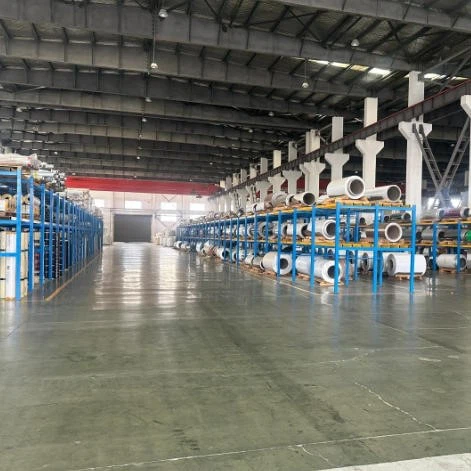
Our goal is to become your true partner in the field of steel wire China. MAILONG METAL PRODUCTS CO.,LTD., established in 2008, is a leading manufacturer and supplier of a full range of steel products. We have a skilled engineering team dedicated to refining every stage, from product development and process improvement to production oversight, ensuring every product delivered meets rigorous quality and performance standards.

The price is competitive and the product is quality-assured, which is a good choice for your long-term cooperation.
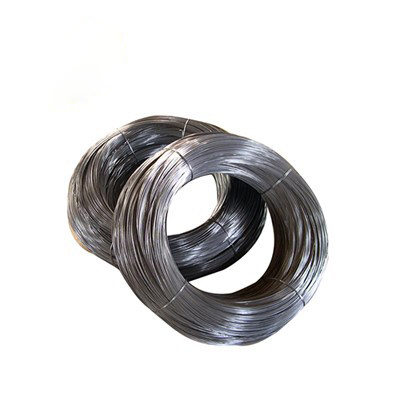
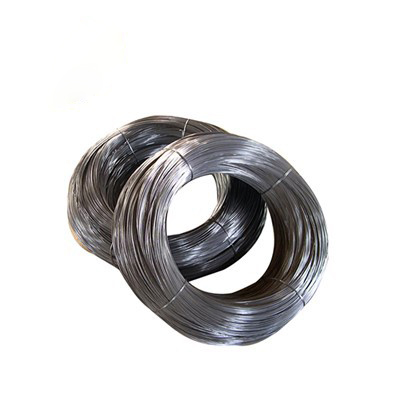
50CrVA Spring Steel Wire
read more
310S Stainless Steel Wire
read more
Q235 Cable Armoring Wire
read more
Specification Of Steel Wire

Specification Of Steel Wire

Diameter Range 0.02 mm – 14 mm (customizable)
Tensile Strength 500 – 1000 MPa
Surface Finish Bright, Matte, Polished, Annealed
Standards ASTM, DIN, JIS, GB

Types of Steel Wire

Stainless steel wire: Stainless steel properties makes it a robust material that does not corrode quickly. Hence, stainless steel wire ropes are ideal for the use where it may come in contact with water and humidity. It is best suited for industries such as marine, architecture, etc.

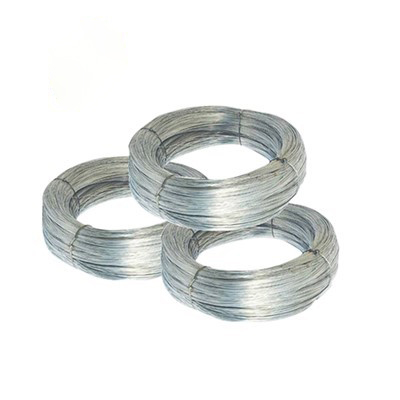
Galvanised steel wire ropes: Galvanised wire ropes are coated with molten zinc. As a result, galvanised steel wire ropes display the features such as high strength, corrosion resistance, etc. Therefore, these wire ropes are ideal for general engineering purposes.

Carbon steel wire ropes: There are low and high carbon content steel wire ropes. While carbon adds strength to it compromises flexibility. Hence, low carbon steel wire ropes are used where more flexibility is required. On the other hand, high carbon steel wire ropes are used where the focus is more on strength and not on flexibility.

Coated steel wire ropes: Coated wire ropes are generally coated or jacketed with materials such as polypropylene, PVC, nylon, etc. Such coating offers protection to the steel wire against wear and tear and also corrosion.

304 stainless steel wire
Chemical Composition Of Steel Wire

Chemical Composition Of Steel Wire

Element Symbol Content (%) Function / Notes
Carbon C ≤ 0.08 Controls hardness and ductility; higher carbon increases hardness
Silicon Si ≤ 1.00 Enhances strength and oxidation resistance
Manganese Mn ≤ 2.00 Improves strength and hot working properties
Phosphorus P ≤ 0.045 Excess can cause brittleness
Sulfur S ≤ 0.030 Enhances machinability; too much reduces ductility
Nickel Ni 8.00 – 10.50 Increases corrosion resistance, toughness, and oxidation resistance
Chromium Cr 18.00 – 20.00 Provides stainless characteristics and corrosion resistance
Nitrogen N ≤ 0.10 (trace) Contributes to strength
Iron Fe Balance Base metal
PH Stainless Steel - Overview
Features & Advantages
  • High Strength After Aging Treatment

    Strength levels far exceed those of standard stainless steels, making them ideal for high-load components.

  • Excellent Corrosion Resistance

    Comparable to 304 and 316 stainless steel in most industrial and marine environments.

  • Good Toughness & Fatigue Resistance

    Maintains mechanical integrity under cyclic loads and harsh service conditions.

  • Precision, Stability & Low Deformation

    PH steels retain dimensional accuracy after heat treatment, suitable for precision-engineered parts.

  • Wide Range of Mechanical Properties

    Mechanical strength can be adjusted by varying aging temperature (H900, H1025, H1150, etc.).

  • Good Machinability

    Better machinability than austenitic stainless steel after aging hardening.

Common Grades & Highlights
17-4PH (AISI 630 / UNS S17400)
  • Most widely used PH grade
  • High strength + good corrosion resistance
  • Suitable for aerospace, chemical equipment, valves, and shafts
15-5PH (UNS S15500)
  • Better toughness than 17-4PH
  • Clean microstructure, excellent strength
  • Common in aircraft components, nuclear power, and high-pressure systems
13-8Mo (UNS S13800)
  • Exceptional toughness
  • Excellent stress-corrosion cracking resistance
  • Used in military aerospace, structural parts
17-7PH (UNS S17700)
  • High strength + high-temperature stability
  • Ideal for springs, diaphragms, and precision mechanical parts
Applications
  • Aerospace & Defense
  • Petrochemical & Energy
  • Marine & Offshore
  • Precision Engineering
  • Nuclear & Power Generation
Aerospace & Defense
Aerospace & Defense
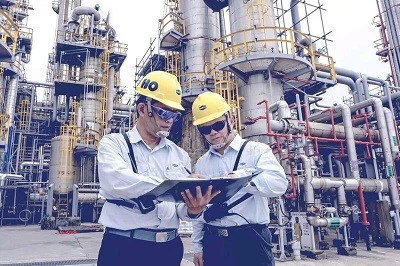
Petrochemical & Energy
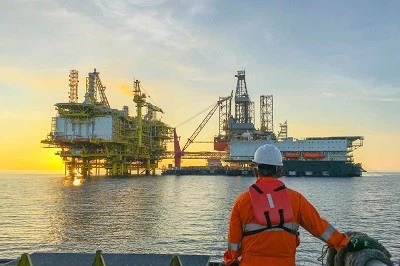
Marine & Offshore
Marine & Offshore
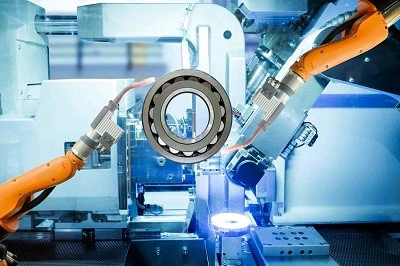
Precision Engineering
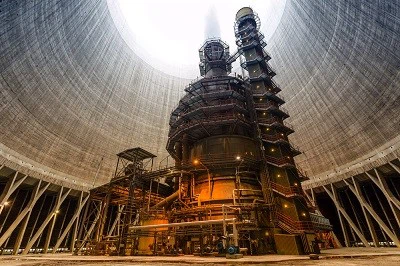
Nuclear & Power Generation
Why Buy From mailongmetals?
  • Full stock of Incoloy 800/825 pipe, sheet, bar & wire
  • Cut-to-length, threading, CNC machining service
  • Weldability guidance + filler suggestions (e.g., ERNiCrMo-3)
  • Precision forging + solution annealing available
  • Corrosion simulation & technical support
  • Global supply network with fast dispatch
FAQ + Contact Form
Frequently Asked Questions
1. What are Incoloy alloys?
Incoloy alloys are high-performance nickel–iron–chromium alloys designed for excellent corrosion resistance, high-temperature strength, and long-term durability in harsh industrial environments.
2. What industries commonly use Incoloy alloys? +
They are widely used in petrochemical plants, heat-treatment equipment, offshore oil and gas systems, power generation, aerospace components, and marine engineering.
3. How are Incoloy alloys different from Inconel alloys? +
Incoloy contains more iron, making it more cost-effective for high-temperature and corrosion-resistant applications, while Inconel provides higher strength at extreme temperatures.
4. What are the most popular grades of Incoloy? +
Common grades include Incoloy 800, 800H, 800HT, 825, 901, and 925, each offering specific resistance to oxidation, acids, stress corrosion, and elevated temperatures.
5. Can Incoloy alloys withstand high temperatures? +
Yes. Grades like Incoloy 800H/800HT perform exceptionally well between 600–1100°C, offering excellent structural stability and oxidation resistance.
6. Are Incoloy alloys resistant to acid corrosion? +
Incoloy 825 and 925 are specifically designed for resistance to sulfuric acid, phosphoric acid, seawater, and chloride-related corrosion.
7. What product forms are available for Incoloy alloys? +
They are available in plates, sheets, coils, bars, rods, wires, tubes, fittings, and customized machined parts.
8. Can Incoloy alloys be welded easily? +
Yes. Incoloy alloys generally have good weldability using TIG, MIG, or SMAW methods, though proper pre-cleaning and heat control are recommended.
9. Do Incoloy alloys require special heat treatment? +
Some grades require solution annealing or stabilization treatments to achieve optimal mechanical properties and corrosion resistance.
10. How do I select the right Incoloy grade for my project? +
Selection depends on operating temperature, chemical environment, mechanical load, and required corrosion resistance. Providing your application details helps engineers recommend the best grade.
Let Us Know Your Required Grade

Whether You're Building A Heat Exchanger, Chemical Reactor, Or Marine Component, XuRui Offers Top-Quality Incoloy Materials With Full Certification And Global Delivery.